
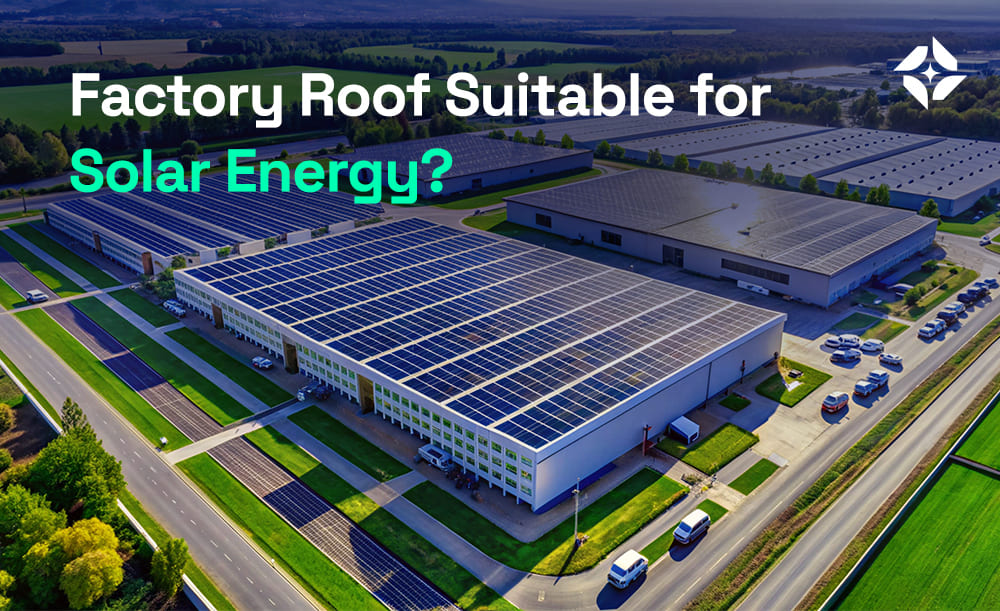
Factory roof solar is becoming a popular choice for factories that want to save money on electricity. Instead of using only grid power, factories can use their empty roof space to generate clean energy from the sun. This not only reduces electricity bills but also helps the environment. Raynex Power Solution helps factories check if their roof is good for solar panels. They also guide you through the whole process, from planning to installing the system. With the right guidance, factory owners can turn their rooftops into a smart energy solution that works for many years.
Many factory owners ask:
“Is my factory roof suitable for solar?”
Most EPC companies will give you a quick answer after a site visit.
But in reality, there is one critical test that decides everything:
- Structural Load Capacity Test
If this one test is ignored, your solar project can face serious risks in the future.
1. What is the “1 Test” That Decides Everything?
The answer is simple:
Can your roof safely handle the additional load of a solar plant for 25 years?
This is called a Structural Load Test or Roof Load Analysis.
2. Why This Test is So Important
A solar plant is not lightweight when you consider:
- Solar panels
- Mounting structure
- Ballast (if used)
- Wind pressure impact
Total load can be 15–25 kg per square meter (or more)
If your roof is not designed for this:
- Cracks may develop
- Water leakage may start
- Structural damage can occur
3. What Does the Structural Test Check?
A proper engineering assessment includes:
1. Dead Load Capacity
- Existing roof strength
- Material type (RCC, PEB, sheet)
2. Additional Solar Load
- Panel + structure weight
- Distribution of load
3. Wind Load Impact
- Uplift forces during high winds
- Especially critical in regions like Gujarat
4. Safety Factor
- Long-term durability for 20–25 years

4. Types of Factory Roofs & Their Suitability
1. RCC Roof
- Generally strong
- High load capacity
- Most suitable for solar
2. PEB / Sheet Roof
- Requires detailed analysis
- Depends on purlin strength
- Not always directly suitable
3. Old Buildings
- Risk increases
- Detailed audit is mandatory
5. What Happens If You Skip This Test?
Ignoring structural analysis can lead to:
- Roof damage within a few years
- Leakage issues
- Safety hazards
- Expensive repair costs
In worst cases, complete removal of the solar system may be required
6. Engineering-Based Decision (Not Guesswork)
Many EPC companies:
- Do visual inspection only
- Assume roof is strong
- Skip detailed calculation
This is risky
A proper approach includes:
- Structural calculations
- Load distribution design
- If needed, third-party structural certification
7. Real Insight
Solar success does not start with panels.
It starts with understanding the roof.
Even a perfect solar system will fail if the foundation (roof) is weak.
8. Conclusion
Before installing solar on your factory roof, ask just one question:
Has a proper structural load test been done?
If yes, you are safe.
If not, you are taking a long-term risk.
Final Thought
Not every roof is solar-ready.
But every roof can be made solar-ready with the right engineering.
Raynex Power Solution Pvt. Ltd. follows an engineering-first EPC approach, ensuring every rooftop solar project starts with a detailed structural assessment for safety, durability, and long-term performance. Factory roof solar is a smart way to save electricity and reduce costs. If your factory roof gets good sunlight and has enough space, it can work very well for solar panels. Even a simple check like seeing if your roof is shadow-free can help you decide.
FAQs
1. What is factory roof solar?
Factory roof solar is a system where solar panels are placed on the roof of a factory to make electricity from sunlight. It helps factories reduce electricity costs and utilize unused roof space efficiently.
2. How do I know if my factory roof is suitable for solar?
The easiest way to check is the shadow-free test. If your factory roof gets direct sunlight with no shade from 10 AM to 4 PM, it is good for solar panels. You should also check if the roof is strong, has enough space, and how much electricity you use.
3. How much space is required for factory roof solar?
On average, 1 kW of solar system requires around 100 sq.ft. of shadow-free roof area. The total required space depends on your electricity consumption and desired system size.
4. Can factory roof solar reduce electricity bills?
Yes, factory roof solar can reduce electricity bills by 40% to 70%, depending on system size and energy consumption. It provides long-term savings and protection from rising power costs.
5. Why is factory roof solar a good investment?
Solar panels on factory roofs help save money on electricity. They are better for the environment, give factories more control over their energy, and turn empty roof space into a way to earn extra income.