
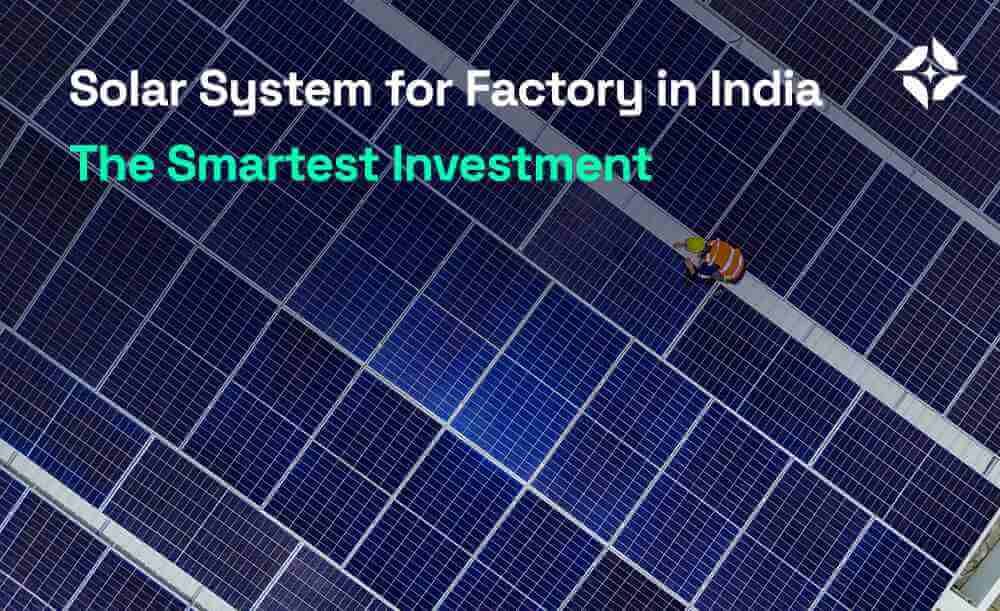
Electricity is a major operating cost for factories. Motors, compressors, pumps, cooling systems, lighting, and production equipment can keep power demand high throughout the working day.
A solar system for factory in India can reduce part of that grid consumption by generating electricity at the site. But the value of the project depends on the factory’s load pattern, system size, available space, equipment, and financial model.
For industrial users, solar works best when the system is planned around actual electricity use rather than simply installing as many panels as the roof can hold.
Why Are Factories in India Switching to Solar Energy?
Factories often use a large share of their electricity during daylight hours. This makes on-site solar useful because generation and production demand can overlap for much of the day.
Rising Industrial Electricity Costs
Higher electricity tariffs directly increase production costs. Solar can reduce the number of grid units purchased during daylight hours and bring more control over long-term energy expenses.
Reducing Dependency on Grid Power
Solar does not automatically make a factory grid-independent, but it can reduce daily grid consumption. This gives businesses more control over a portion of their energy requirement.
Better ROI and Long-Term Savings
Factories that consume most of their solar generation during the day usually get better value from the system. More self-consumption means more solar units are replacing electricity that would otherwise have been purchased from the grid.
Supporting Sustainable Manufacturing
On-site solar also helps manufacturers add renewable energy to their operations and support wider sustainability or energy-management goals.
How Does a Solar System Work for a Factory?
Solar panels generate DC electricity from sunlight. An industrial solar inverter converts this electricity into AC power that can be used by the factory.
The solar electricity serves available factory loads. If generation is not enough to meet demand, the remaining requirement comes from the grid. Depending on the system and applicable grid rules, surplus generation may also be exported.
You can read more about how an industrial solar system works for a detailed explanation of the power flow.
Which Solar System for Factory Is the Best Option?
On-Grid Solar System
An on-grid solar system for factories is commonly used where grid supply is reliable and daytime electricity demand is high.
The system works alongside the grid and usually does not require battery storage, which keeps the initial investment lower.
Hybrid Solar System
A hybrid solar system for industries combines solar, grid power, and battery storage.
It is more suitable where backup is needed for selected loads or stored electricity has a clear operational use. Since batteries add to project cost, storage should be sized around actual requirements.
How Much Solar Capacity Does a Factory Need?
Solar capacity should be based on the factory’s electricity profile, not only on available roof space. Important inputs include:
- Monthly electricity consumption
- Daytime load
- Operating hours
- Shadow-free roof or land area
- Existing electrical infrastructure
- Future expansion plans
An oversized plant may produce more surplus electricity than the factory can use effectively. A plant that is too small may leave a large share of daytime demand dependent on grid power.
Raynex Power Solution covers the calculation in more detail in its guide on solar system sizing for factories.
Industrial Solar System Cost in India: What Determines the Price?
There is no fixed industrial solar panel price in India for a complete factory project. The final cost depends on the system design and site.
Solar System Capacity
A larger plant requires more modules, inverters, mounting structures, cables, and electrical equipment. Capacity is one of the biggest factors affecting project cost.
Equipment Quality and Technology
Module technology, inverter quality, monitoring, electrical protection, and warranties can influence both initial cost and long-term performance.
The lowest quotation is not always the best choice if important equipment or engineering specifications have been reduced.
Installation and Site Requirements
Roof type, structural condition, cable routes, access, shading, transformer location, and any civil work can affect the final factory solar panel installation cost.
A proper site survey is important before the final EPC price is confirmed.
How Much Can a Factory Save With Solar?
Savings depend on how much solar electricity the factory can use directly and the cost of the grid electricity it replaces.
Electricity tariff, annual generation, system performance, financing, and O&M costs also affect the result.
What Affects Solar ROI and Payback?
There is no single payback period for every factory. ROI depends mainly on:
- Project cost
- Electricity tariff
- Annual solar generation
- Daytime self-consumption
- Financing cost
- O&M expenses
- Applicable tax treatment
Factory owners should review calculations based on their own electricity bills and load pattern rather than relying on a standard payback claim.
For more detail, see Raynex Power Solution’s guide on the ROI of industrial solar plants.
CAPEX vs OPEX Solar Model for Factories
Factories can either own the solar plant or purchase solar electricity through a third-party arrangement.
CAPEX Solar Model
Under the CAPEX model, the factory invests in the solar plant and owns the system, allowing it to use the generated electricity directly.
OPEX / PPA Solar Model
Under the OPEX or PPA model, a solar provider usually invests in the project and supplies electricity to the factory at an agreed tariff.
| Factor | CAPEX | OPEX / PPA |
|---|---|---|
| Upfront investment | Factory funds the project | Usually lower |
| Ownership | Factory | Solar provider |
| Electricity | From owned system | Purchased at agreed tariff |
| O&M | As per service agreement | Usually provider-managed |
| Suitable for | Businesses seeking ownership | Businesses preserving capital |
The suitable model depends on available capital, tariff, tax position, and contract conditions.
What Are Accelerated Depreciation Benefits for Solar in India?
Eligible businesses may be able to claim depreciation on solar power generating assets under applicable tax rules.
This can improve the financial case for a business-owned solar plant, but the actual tax benefit depends on the company’s taxable income, ownership structure, and accounting treatment.
Factories should confirm the current treatment with their tax advisor before including depreciation benefits in ROI calculations.
Are Solar Subsidies Available for Factories?
Factories should not assume that residential rooftop subsidies also apply to industrial installations.
Industrial incentives can vary by state, project type, financing structure, and current policy. Any benefit should be verified for the specific project before it is added to the financial plan.
Factory Solar Installation Process
A typical industrial solar project moves through five stages:
- Energy assessment: Review electricity bills, load profile and operating hours.
- Site survey: Check roof or land, shading, structure, access and electrical infrastructure.
- System design: System capacity, module layout, inverter selection, cable routing, and protection systems are finalized.
- Installation and commissioning: The plant is installed, tested, and commissioned according to the approved design.
- Grid integration and handover: Complete applicable metering, monitoring, approvals and documentation.
Things to Check Before Installing Solar for Your Factory
When comparing EPC proposals, look beyond the total price.
Check the proposed generation assumptions, module and inverter warranties, electrical protection, monitoring, O&M support, project exclusions, and after-sales service.
Compare the technical scope carefully, especially equipment specifications, protection systems, monitoring, warranties, and O&M support.
Is Solar a Smart Investment for Factories in India?
Solar can make financial sense for factories with steady daytime electricity demand, suitable installation space, and long-term plans for the facility.
The decision should come from actual project numbers. Capacity, expected generation, self-consumption, investment cost, and payback assumptions should be clear before the project is approved.
Good system design can have as much influence on long-term performance as equipment price.
FAQs
What is the cost of a solar system for a factory in India?
The cost of a solar system for a factory in India on system capacity, equipment, site conditions, electrical infrastructure, and EPC scope. A site-specific estimate is more useful than applying one standard per-kW rate to every factory.
What affects the ROI of a factory solar system?
Electricity tariff, project cost, annual generation, self-consumption, financing, maintenance, and tax treatment can all influence ROI.
Which solar system is best for factories?
On-grid systems are commonly suitable for factories with reliable grid supply and high daytime demand. Hybrid systems may be useful where battery-supported backup is required.
How much rooftop space is required for factory solar installation?
The requirement depends on module size, layout, shading, roof obstacles, access, and structural conditions. Usable shadow-free area matters more than total roof size.
How long does an industrial solar system last?
Quality solar modules can operate for decades, although output gradually reduces over time. Inverters and other components may have different maintenance or replacement cycles.
Conclusion
A solar system for factory in India should be planned around actual electricity consumption, site conditions, and business goals. Raynex Power Solution can assess the factory’s load, available installation area, required capacity, and project economics before the design is finalized. An experienced Solar EPC company can then design the plant around the site’s actual operating requirements.