
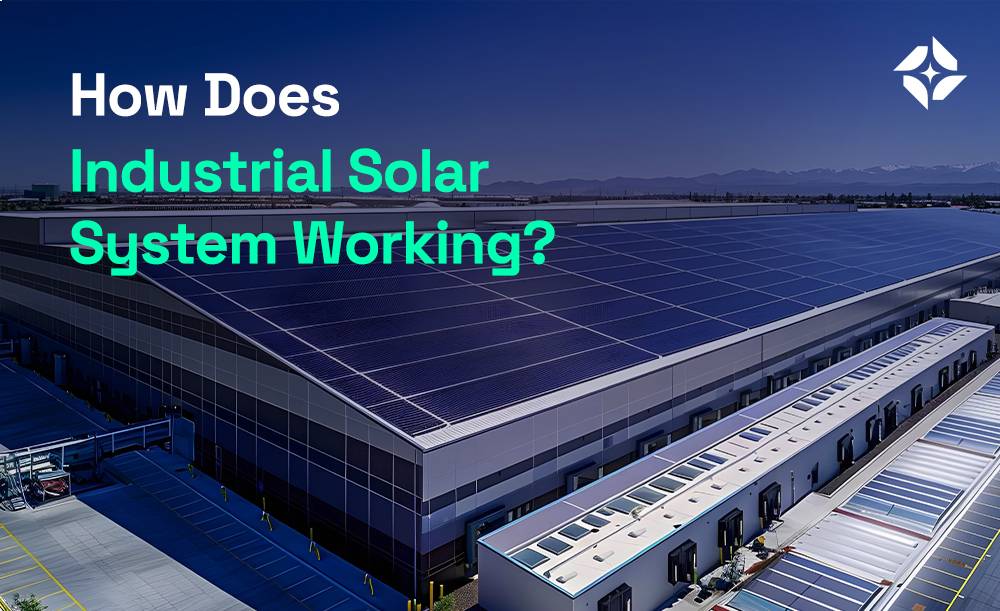
Solar energy is becoming very popular for factories and industries. Many businesses are now using solar power to save money and protect the environment. To understand this better, it is important to learn about how an industrial solar system works in simple terms. An industrial solar system helps factories use sunlight to make electricity for their everyday work. This power can run machines, lights, and other equipment. A trusted Solar EPC provider like Raynex Power Solution Pvt. Ltd. helps industries design, install, and maintain these solar systems from start to finish.
What is an Industrial Solar System?
An industrial solar system is a large solar power setup used by factories and big buildings. It uses sunlight to make electricity that runs machines, lights, and other equipment. These systems are bigger and stronger than home solar systems because industries need more power.
They can be installed:
- On rooftops
- On open land (ground-mounted)
Industrial Solar System Working: Step-by-Step Process
Understanding how an industrial solar system works helps us see how sunlight can power big factories and buildings. Here is an easy step-by-step explanation of how it works:
Step 1: Sunlight Hits the Solar Panels
Solar panels collect sunlight and turn it into electricity.
Step 2: Electricity is Converted
The electricity made by the panels is called DC power. An inverter changes it into AC power, which machines can use.
Step 3: Power is Used in the Factory
The electricity flows into the factory and runs machines, lights, and other equipment.
Step 4: Extra Power Goes to the Grid
If more electricity is made than needed, the extra power is sent to the grid. When there is less sunlight, power can be taken back from the grid.
Step 5: System is Monitored
A monitoring system checks how much electricity is made and used. It helps keep the system working well.
Key Components of an Industrial Solar System
An industrial solar system has a few main parts that work together to make and use electricity from sunlight:
- Solar Panels – These capture sunlight and turn it into electricity.
- Inverter – This changes the electricity into a form that machines can use.
- Mounting Structure – This holds the panels in place, either on roofs or on the ground.
- Cables & Switches – These safely carry electricity through the system.
- Monitoring System – This helps track how much energy is being produced and used.
- Battery (Optional) – This stores extra energy for use later, like at night or during power cuts.
Types of Industrial Solar Installations
There are different ways industries can install solar systems based on their space and needs.
1. Rooftop Solar Systems
- These solar panels are placed on the roof of a factory or building.
- They use empty roof space to generate electricity and save money.
2. Ground-Mounted Solar Systems
- These systems are installed on open land near the industry.
- They are good for large power needs and can produce more energy.
3. Hybrid Solar Systems
- These systems use solar power along with batteries or other power sources.
- They store extra energy and provide backup when needed.
Benefits of Industrial Solar Energy
Industrial solar energy helps factories and businesses save money and use clean power. Here are the main benefits:
Saves Money
Solar power reduces electricity bills, which helps businesses save a lot over time.
Clean and Green Energy
Solar energy does not cause pollution. It helps protect the environment.
Less Dependence on Grid Power
Businesses do not have to rely fully on electricity from the grid.
Works for Many Years
Solar systems last a long time, usually 20–25 years.
Low Maintenance
Solar panels do not need much maintenance. Just regular cleaning is enough.
Supports Business Growth
Lower energy costs help companies grow and invest in other areas.
Good for Company Image
Using solar energy shows that a company cares about the environment.
Government Benefits
Some governments offer support or incentives for using solar power.
Conclusion
Understanding how industrial solar systems work is not as hard as it seems. Solar systems use sunlight to make electricity, which helps factories and industries run their daily work. This clean energy source helps save money and protects the environment at the same time. With the help of a trusted Solar EPC company like Raynex Power Solution, industries can easily switch to solar power.
FAQs
1. How does an industrial solar system generate electricity?
An industrial solar system makes electricity using solar panels. These panels take energy from sunlight and turn it into electricity that can be used to power machines and buildings. This DC power is then converted into alternating current (AC) using inverters, making it suitable for industrial use.
2. What are the main components involved in an industrial solar system working?
The main parts are solar panels, inverters, mounting frames, wires, switches, and monitoring systems. Some systems may also include battery storage for backup and energy management.
3. What is the role of inverters in an industrial solar system working?
Inverters are very important in a solar system. Solar panels make electricity called DC power. But most machines and equipment use AC power. An inverter changes DC power into AC power so it can be used to run different machines.
4. What is net metering in industrial solar systems?
Net metering lets factories send extra solar power they don’t use back to the electricity grid. In return, they get credits they can use later. These credits can be used when the system generates less power than required.
5. How long does an industrial solar system last?
Most industrial solar systems last about 20 to 25 years or even longer. With regular care, they can keep working well for many years.