
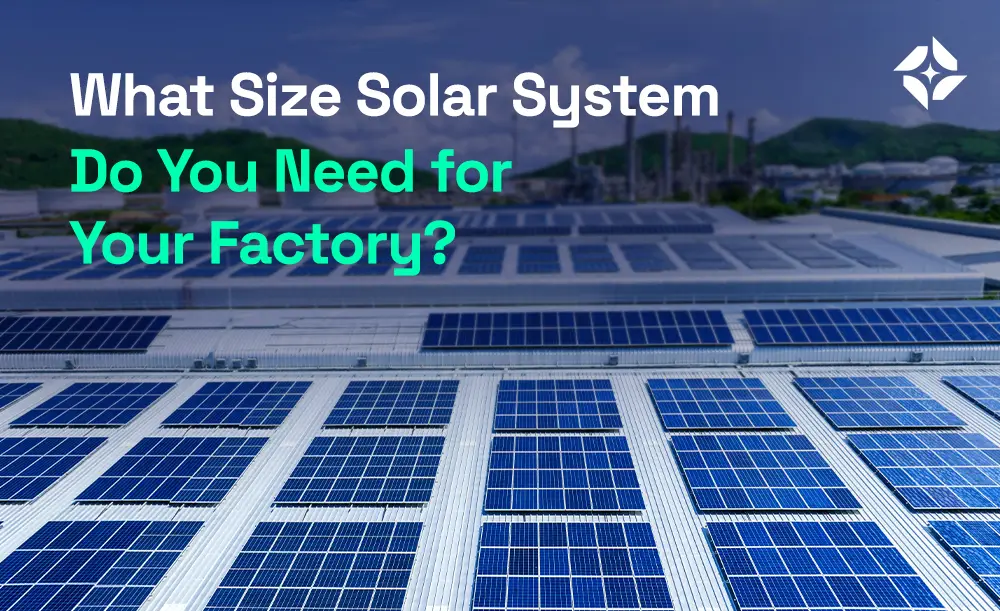
When factories think about switching to solar power, one of the first questions is: how big should the system be? This is where solar system size calculation becomes important. It helps you understand how much solar power your factory actually needs to run smoothly and save money. As a trusted Solar EPC company, Raynex Power Solution helps businesses make this process simple and clear. With the right help, factories can pick the right size solar system, save money, and get the most out of their solar panels.
Why Solar System Size Calculation Matters
Getting the right solar system size is very important. It helps you:
- Save more money (better return on investment)
- Produce the right amount of electricity
- Recover your cost faster
- Match your factory’s energy needs properly
Step-by-Step Solar System Size Calculation for Factories
Calculating the right size for a solar system is important. It helps you build an Industrial Solar plant for your factory that works well and does not cost too much. Follow these step-by-step guidelines to determine the ideal system capacity:
Check Your Electricity Use
Look at your electricity bills from the last 12 months. Find:
- Total units used in a year
- Monthly usage
- High usage months
Example: If your factory uses 1,20,000 units per year, use this number for calculation.
Measure Available Space
Check how much space you have for solar panels.
- Rooftop: About 100 sq. ft. needed for 1 kW
- Ground: Needs open land
Example:
10,000 sq. ft. space ≈ 100 kW system
20,000 sq. ft. space ≈ 200 kW system
Know Solar Power Output
Solar panels make different amounts of energy based on location. In Gujarat: 1 kW system makes about 1,500 units per year
Calculate System Size
Use this simple formula:
System Size (kW) = Total yearly units ÷ 1,500
Example:
1,20,000 ÷ 1,500 = 80 kW system
Plan for Future Growth
Your industrial unit may grow in the future. Think about:
- New machines
- More production
- Extra shifts
Check Government Rules
Some rules may affect your system size. Check:
- Net metering limits
- Electricity connection limits
It is best to take help from a solar expert.
Key Factors That Affect Solar System Size
The size of a solar system depends on a few simple things:
- Electricity Use – How much power your Company uses every day.
- Available Space – The size of your roof or land where solar panels can be installed.
- Sunlight in Your Area – More sunlight means more power generation.
- Shadows – Trees, buildings, or dust can block sunlight and reduce output.
- Working Hours – Factories running during the day use solar power more efficiently.
- Future Growth – If you plan to expand, you may need a bigger system.
- Local Rules (DISCOM) – Government and electricity board rules can affect system size.
Typical Solar System Sizes for Factories
Factories come in different sizes, so their solar systems are also different. Here is a simple way to understand:
- Small factories: 20 kW to 100 kW
- Medium factories: 100 kW to 500 kW
- Large factories: 500 kW to 5 MW or more
A bigger company uses more electricity, so it needs a bigger solar system. Smaller factories need less power, so a smaller system is enough.
Benefits of Accurate Solar Sizing
When your solar system is the right size, it works better and saves you more money. Here’s how:
- Lower electricity bills: You can save a big amount on your power costs.
- Better savings over time: You get more value from your investment.
- Faster payback: You recover your money quicker, usually in a few years.
- Less pollution: Solar energy is clean and helps protect the environment.
- Reliable power: Your factory gets steady energy for daily work.
Conclusion
A proper solar system size calculation helps you save money and get the best performance from your system. If the size is wrong, you may not get enough power or may spend more than needed. Raynex Power Solution, a trusted Solar EPC provider, makes this process simple and accurate. Their team can study your energy use, check your site, and design the right system for your needs.
FAQs for Solar System Size Calculation
How do I calculate the solar system size for my factory?
To find out how big your solar system should be, start with your factory’s yearly electricity use (in units or kWh). Then divide that number by how much electricity 1 kW of solar panels can make in a year (usually about 1,500 to 1,650 units in India).
What factors affect solar system size calculation for industrial units?
Think about how much electricity you use, how much space you have on your roof or land, and how much sunlight your area gets. Check if there are any shadows that could block the sun. Also, consider if you might need more power in the future and follow the rules from your local electricity company.
How many solar panels are required for a factory?
The number of panels depends on the calculated system size and panel wattage. For example, a 100 kW system using 540W panels would require approximately 185–190 panels.
What is the ideal solar system size for a small factory?
A small factory typically requires a system between 20 kW and 100 kW, depending on its electricity usage and operational hours.
Who can help with accurate solar system size calculation for factories?
A solar EPC company can study your needs carefully. They check your site, look at how much energy you use, and design the right system. This helps choose the best system size for you.